Discover how neuroscience principles like microlearning, memory, and repetition can help organizations build more effective, engaging employee training
1% of a workday. That is the amount of time an employee can devote to building new skills, according to the "Meet the Modern Learner" study by Bersin by Deloitte. More than free time, it is the availability of attention that is truly at stake.
In today's hyperconnected digital environment, shrinking attention spans reduce both employee availability and productivity. Organizations face two related challenges: capturing employee attention in the first place, and then building knowledge and skills that actually last.
Muscle memory, microlearning, learning by doing -- in this article, Lemon Learning explores the intersection of neuroscience and the digital age. The goal: optimizing training content and learner engagement.
Catching and Maintaining Attention: How Microlearning Addresses Modern Training Challenges
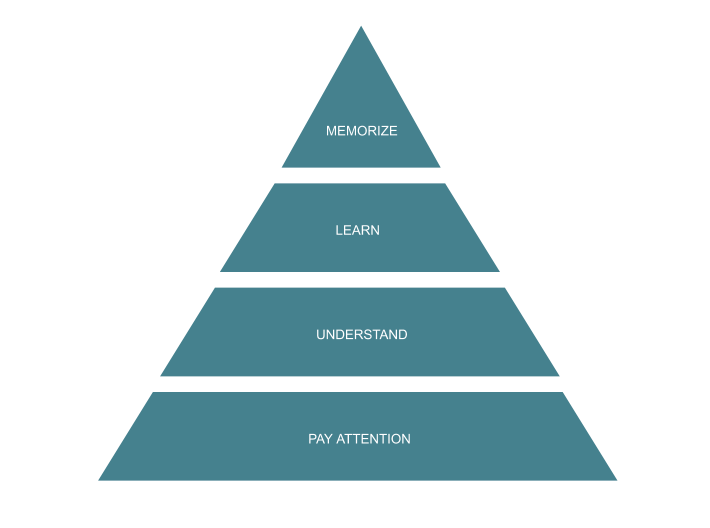
Whether needed to understand, memorize, or problem-solve, human attention is a mental resource with a direct impact on performance. The greater the attention, the better the outcome.
Attention is the process by which the brain prioritizes certain signals over others -- a filter that determines which information to focus on from everything received at a given moment. It is also the foundation of learning: without attention, there is no comprehension or memorization.
Source: NeuroLearning. Les neurosciences au service de la formation, Dr Nadia Medjad, Philippe Gil, Philippe Lacroix, Eyrolles, 2017.
An adult brain has an attention span of around 20 minutes for moderately complex subjects, dropping to roughly 10 minutes for highly complex ones.
In a world where speed and brevity have become the norm, instructional designers must adapt to capture learner attention. One proven response is microlearning -- short training sequences of 30 seconds to 3 minutes, delivered via video, text, images, or audio.
Microlearning offers several practical advantages:
Avoids cognitive overload by delivering information in small, manageable doses.
Supports independent learning, giving employees access to training when and where they need it.
Fills knowledge gaps quickly, so employees focus only on what they have not yet mastered.
Meets just-in-time training demands, with short, standalone modules each tied to a single learning objective.
Digital solutions such as Lemon Learning are built around this just-in-time capability. By integrating directly into users' tools and daily workflows, Lemon Learning's interactive guides provide in-context support without interrupting operational activity.
Microlearning also benefits the people creating training content. Short, focused formats are faster and less expensive to produce. They are also easier to update as applications and processes evolve. And they enable precise, individualized reporting -- tracking views, time spent, and completion by user and program.
With attention being such a limited resource, training professionals must present information in ways that earn and hold it. That is the information most likely to be retained.
Memory and Neuroscience: Keys to Effective Training Design
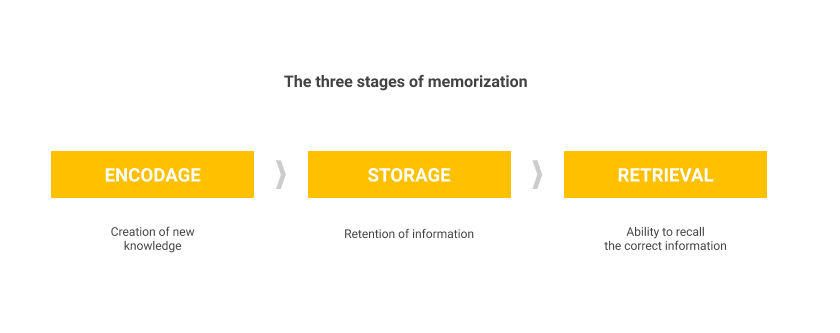
Capturing attention is only the start. Sustaining it and driving long-term retention is the real challenge of organizational training.
Short-term memory (also called working memory) allows us to hold information temporarily while completing a task -- reading, speaking, or calculating, for example. Long-term memory stores information from working memory more permanently, and retrieval can be triggered in multiple ways.
Our senses, prior knowledge, and past experiences all stimulate memory -- whether perceptive, semantic, or procedural. Alongside these three representational memory types sits a fourth: muscle memory, which allows us to perform motor tasks subconsciously (walking, riding a bike, driving). This is the type of memory that underpins learning by doing.
Discover our solution
Methods based on this principle include MOOCs (Massive Open Online Courses), which combine online learning with interactive elements such as case studies and role-playing exercises. Augmented reality is another example: organizations like Rolls Royce and Qatar Airways have used it to train maintenance engineers, achieving retention rates comparable to actual field training.
At Lemon Learning, the learning-by-doing approach is built into every interactive guide. Like GPS navigation, the guides lead users step by step through their applications. Segmented training programs and micro-modules let employees master individual tool features and business processes through on-the-job repetition and on-demand access.
The real challenge is not just acquiring knowledge or retaining it -- it is mobilizing the right knowledge at the right time. And it is repetition that makes that possible.
Lemon Learning -- How Neuroscience Can Help You Create Better Training
Repetition: The Key to Long-Term Memory Retention
When the brain learns, neurons activate and pass information between each other, forming new neural networks -- a principle known as Hebbian learning. The more active these networks become, the more solidified they are. As the authors of NeuroLearning put it: "If to learn is to create new neural networks, then to remember is to reactivate these same neural networks."
For training professionals, the implication is clear: training materials must engage learners (short, interactive, and relevant) and be structured to support long-term retention. This preference for short, high-impact formats extends well beyond training -- bite-sized content, elevator pitches, and character-limited social posts all reflect the same shift in how people communicate and absorb information.
Microlearning is not a complete replacement for other training approaches. In all its forms -- interactive guides, quizzes, videos -- it complements rather than replaces other methods. It is best suited to simple, immediate, operational objectives. It fits naturally into a blended learning strategy, paired with deeper training for complex subjects or soft skills development.
Watch a demo
Sources:
"Meet The Modern Learner: Engaging the Overwhelmed, Distracted, and Impatient Employee", Bersin by Deloitte, 2014.
Philippe Gil, Philippe Lacroix, Digital Learning Book by IL&DI, 2018.
Dr Nadia Medjad, Philippe Gil, Philippe Lacroix, NeuroLearning. Les neurosciences au service de la formation, Eyrolles, 2017.